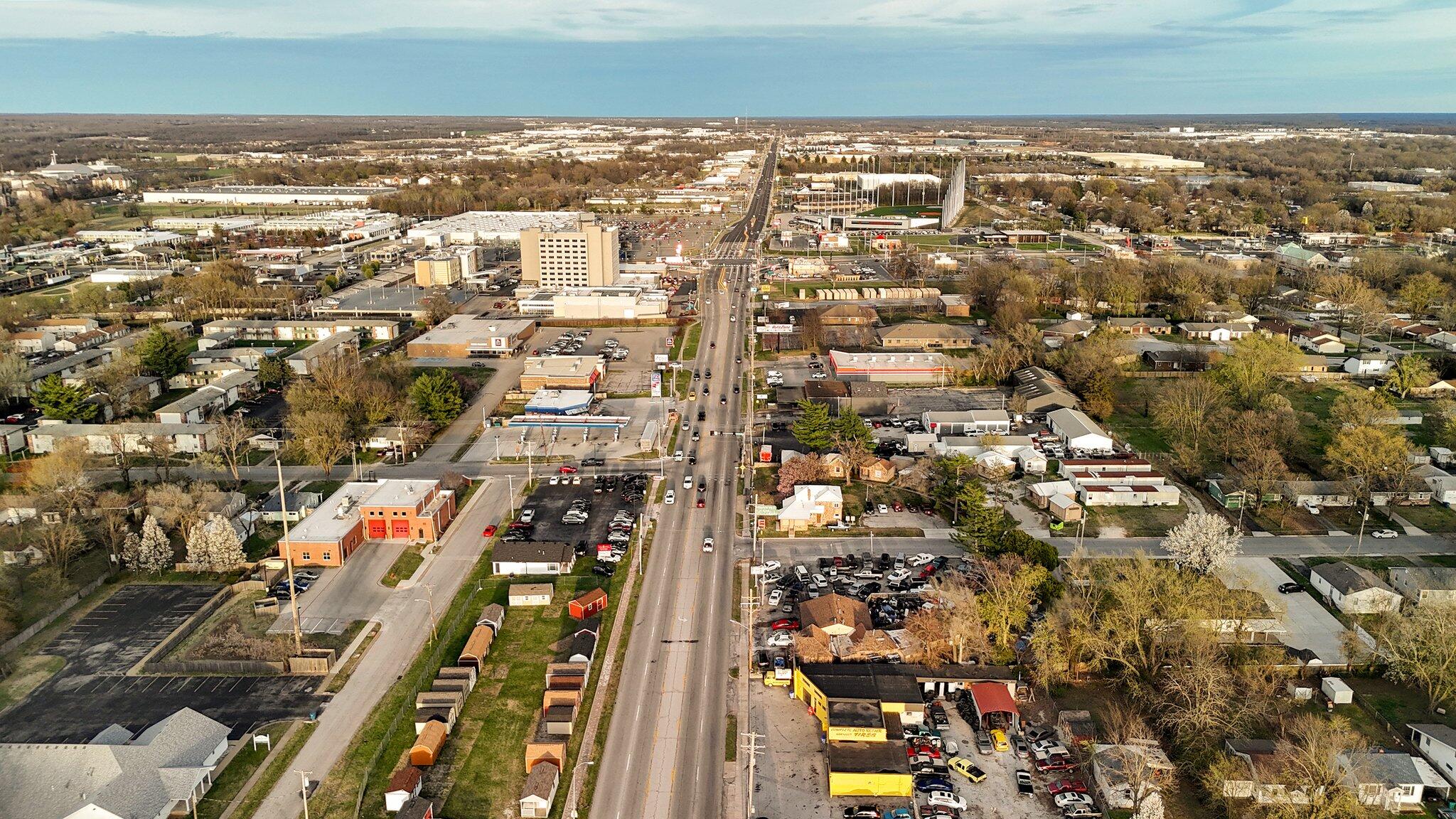
Grandview sits at the Grandview Triangle, where I-49, US-71, and I-435 converge in south Jackson County, and that interchange has made the city one of the more industrial-heavy submarkets in the metro. Exchange work here leans toward distribution and light manufacturing product more than the retail or office focus common in other suburbs, so a search strategy built for a retail-heavy suburb usually needs to be reworked before it applies to Grandview.
Why the Interchange Drives Industrial Demand
Grandview's access to both BNSF and Kansas City Southern rail lines, combined with direct highway frontage at the Triangle, has supported a steady base of distribution, warehouse, and light manufacturing buildings along Blue Ridge Boulevard and Botts Road. Retail in Grandview is smaller in scale and more value-add in character, often older strip product that has traded hands as the surrounding industrial base has grown. Some of the older industrial buildings near the Triangle were originally built for a single manufacturing user and have since been divided among smaller distribution and service tenants, which is worth understanding before pricing a candidate.
Property Types Sourced in This Submarket
- rail-served distribution and warehouse buildings
- light manufacturing and flex space
- highway-frontage industrial land
- value-add strip retail
- truck terminal and outdoor storage sites
Utility Capacity and Envelope Checks on Industrial Product
For Grandview's industrial stock, utility capacity is often the deciding factor in whether a building fits a prospective tenant: three-phase power availability, gas service for manufacturing processes, and dock or rail-door count matter as much as clear height and column spacing. Roof and envelope condition on older distribution buildings near the Triangle should be reviewed closely, since large single-ply roof systems on this vintage of building are a common near-term capital item.
Because Grandview's industrial base attracts logistics users who need specific power and access configurations, confirming utility capacity before naming a property avoids finding out after the 45-day window that a building doesn't fit the intended use, and a mechanical engineer's walkthrough is usually a better source than the listing sheet for actual amp capacity at the panel.
Identification Strategy for Industrial-Heavy Markets
Industrial buildings near the Grandview Triangle can trade faster than retail once priced correctly, given steady demand from logistics and distribution users, so early contact with sellers and brokers matters more than in slower submarkets. The three-property rule tends to work well here when the list mixes a rail-served building, a highway-frontage site, and one flex or value-add retail backup, giving the investor coverage across the different ways Grandview product performs.
Backup Planning Near the Triangle
A documented backup elsewhere in the south Jackson County industrial corridor, rather than only within Grandview itself, protects the identification list if financing or environmental review on the primary candidate takes longer than expected. Coordinating that backup with the lender and qualified intermediary before the 180-day exchange period closes keeps the transaction from depending on a single building, particularly when the primary candidate's history includes a prior manufacturing use that needs a closer environmental look. A backup that leans toward highway-frontage land rather than an existing structure can also give an investor more flexibility if the primary building's tenant fit falls through late in diligence.
Common 1031 Exchange Questions
Why is Grandview considered an industrial-heavy submarket?
Its location at the Grandview Triangle gives direct access to I-49, US-71, and I-435 along with BNSF and Kansas City Southern rail service, which has concentrated distribution, warehouse, and light manufacturing demand in the area more than retail or office.
What utility factors matter most for a Grandview industrial replacement property?
Three-phase power availability, gas service capacity for manufacturing use, and the number of dock or rail doors typically matter more than square footage alone. Confirming these before identification avoids naming a building that doesn't fit the intended tenant use.
Are environmental reviews more common on Grandview industrial deals?
Given the concentration of manufacturing and distribution history in the corridor, environmental due diligence is a routine part of underwriting many Grandview industrial candidates and should be scoped into the identification and closing timeline early.
How does the three-property rule apply to an industrial-focused search here?
Mixing a rail-served distribution building, a highway-frontage site, and one flex or retail backup gives an investor coverage across property types without exceeding three named candidates, which is often a cleaner path than stretching the 200% rule across a narrow industrial comp set.
Can a Grandview industrial property work in a reverse exchange?
It can, though reverse exchanges add coordination steps since the qualified intermediary or an exchange accommodation titleholder must hold the replacement property until the relinquished property sells. Lender preflight and title work should start earlier than in a standard forward exchange given Grandview's industrial financing requirements.
How does rail access affect pricing on a Grandview distribution building?
Direct rail service to BNSF or Kansas City Southern generally supports a pricing premium over a similar building with highway access alone, since it widens the pool of logistics tenants who can use the property without additional trucking cost.
Should a Grandview identification list account for truck traffic and access restrictions?
Yes. Local access routes and any time-of-day truck restrictions near residential edges of Grandview should be checked before naming a property, since a distribution tenant's operating pattern needs to match what the site and surrounding roads can actually support.