Belton sits along the US-71/I-49 corridor in Cass County, a rooftop-growth edge of the south Kansas City metro where new retail is still catching up to residential build-out. Exchange work here runs on a smaller, thinner inventory than the urban core, so the identification list has to reflect what actually trades in this corridor rather than what the broader metro average suggests. Investors coming from a larger property elsewhere in the region sometimes need to reset their pricing expectations once they see how thin the Belton comp set really is.
What Trades in This Corridor
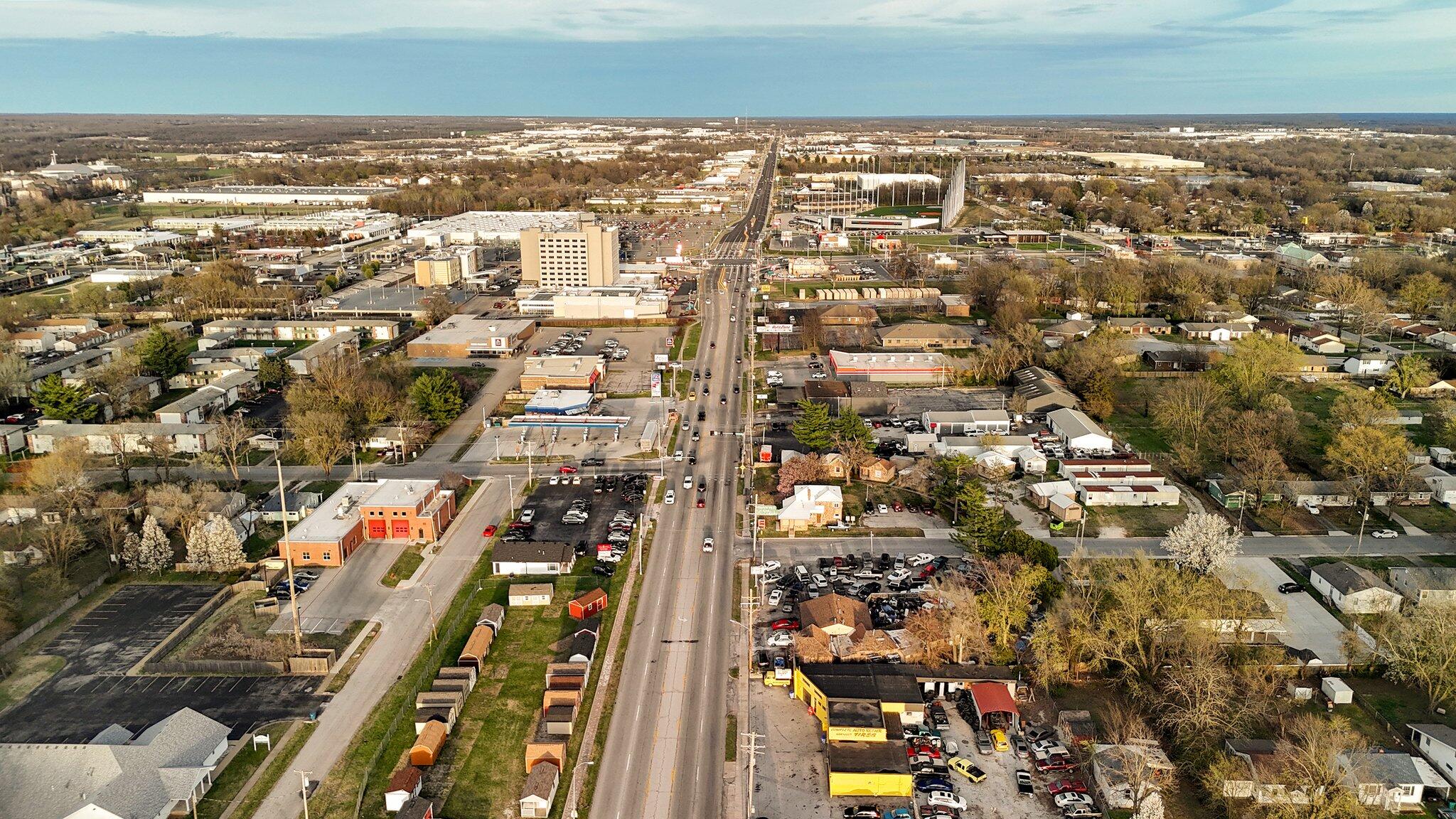
Belton's commercial base sits mainly along Cambridge Drive and the Markey Parkway frontage, where single-story retail and service buildings serve the surrounding rooftop growth, plus a light industrial pocket tied to the Kansas City Southern rail spur and a handful of newer garden-style multifamily properties built to keep pace with new subdivisions on the town's edges. Land at the corporate limits, some of it still row-crop, occasionally shows up as a replacement candidate for investors planning a future build-to-suit rather than an immediate income property. Because the town's population base is smaller than its neighbors, most retail here serves daily-needs tenants rather than destination retail, which shapes how a candidate's rent roll should be underwritten.
Asset Types Investors Typically Screen
- single-tenant retail pads along US-71
- small multi-tenant strip centers
- rail-served light industrial and flex
- garden-style multifamily
- service and quick-lube buildings
- edge-of-town land parcels
Building Envelope and Utility Capacity Before Naming a Property
Older Belton retail and industrial stock tends to carry deferred roof and HVAC work, so envelope condition is worth confirming before a property goes on the written identification list, not after. For the rail-served buildings, utility capacity matters as much as square footage: power service, gas load, and water/sewer tap size can determine whether a candidate actually fits the tenant profile an investor is underwriting.
A short pre-identification walk that documents roof age, panel capacity, and dock or rail access saves rework later, since Cass County's inspection and permitting turnaround is slower than in Jackson County and a failed assumption discovered after the 45-day window closes is expensive to fix. Sellers in this corridor do not always keep detailed capital-expense records, so a direct conversation about recent roof or HVAC work is often more reliable than what's listed in the marketing package.
Running the 45-Day Clock Against a Thin Comp Set
Because Belton's commercial inventory is smaller than the core metro, the three-property rule is often the more workable path than trying to stretch the 200% rule across a shallow list of comparable buildings. Investors who wait until late in the identification window to start pricing Belton candidates frequently find the best-fit building already under contract to a local buyer, so early outreach to the seller and a fast first look matter more here than in a deeper market. A local broker who tracks Cass County listings day to day is often worth more here than a regional platform search, simply because so little product changes hands at any given time.
Comparing Belton With Nearby Cass County Options
A Belton identification list is stronger when it names a primary property plus a documented backup a short drive away, since a single-market list leaves no room if financing or title work stalls on the first choice. Investors should keep the relinquished-property sale, the qualified intermediary's exchange agreement, and the Belton due diligence file moving on the same schedule so the 180-day exchange period isn't spent waiting on one slow piece. Constructive receipt is worth flagging early with the QI, since a small-town seller unfamiliar with exchange mechanics can inadvertently create a receipt issue by routing funds the wrong way at closing.
Common 1031 Exchange Questions
Is Belton's retail inventory deep enough to support a full three-property identification list?
Usually, yes, but it takes broader searching than in the urban core. Pairing a US-71 retail pad with a rail-served flex building and one backup candidate outside Belton is a more reliable structure than trying to find three comparable Belton retail properties alone.
What should I check first on an older Belton strip center?
Start with roof age and condition, HVAC unit count and age, and electrical panel capacity, since deferred maintenance on smaller-format retail here is common. A short envelope and utility review before naming the property avoids surprises during the 45-day identification window.
Does a smaller submarket like Belton limit my choice of qualified intermediary?
No. The qualified intermediary role is set by federal exchange rules and the QI can operate nationally, so Belton's size affects local property sourcing and closing coordination, not QI selection or the exchange agreement itself.
How does Cass County's permitting pace affect exchange timing?
Cass County inspection and permitting turnaround typically runs slower than Jackson County, which matters if a replacement property needs work verified before closing. Building that lead time into the 180-day exchange period, rather than assuming a Kansas City-core pace, keeps the closing schedule realistic.
Is boot a concern when trading into a lower-priced Belton property?
It can be. If the Belton replacement property is priced well below the relinquished property's net sale value, the difference can be treated as boot and become taxable, so an investor's tax advisor should confirm the numbers before the exchange agreement is finalized.
How far outside Belton should a backup candidate be?
Close enough to tour quickly, typically within Cass or southern Jackson County, but different enough in tenant profile that it isn't exposed to the same local vacancy or lease-rollover risk as the primary Belton candidate.