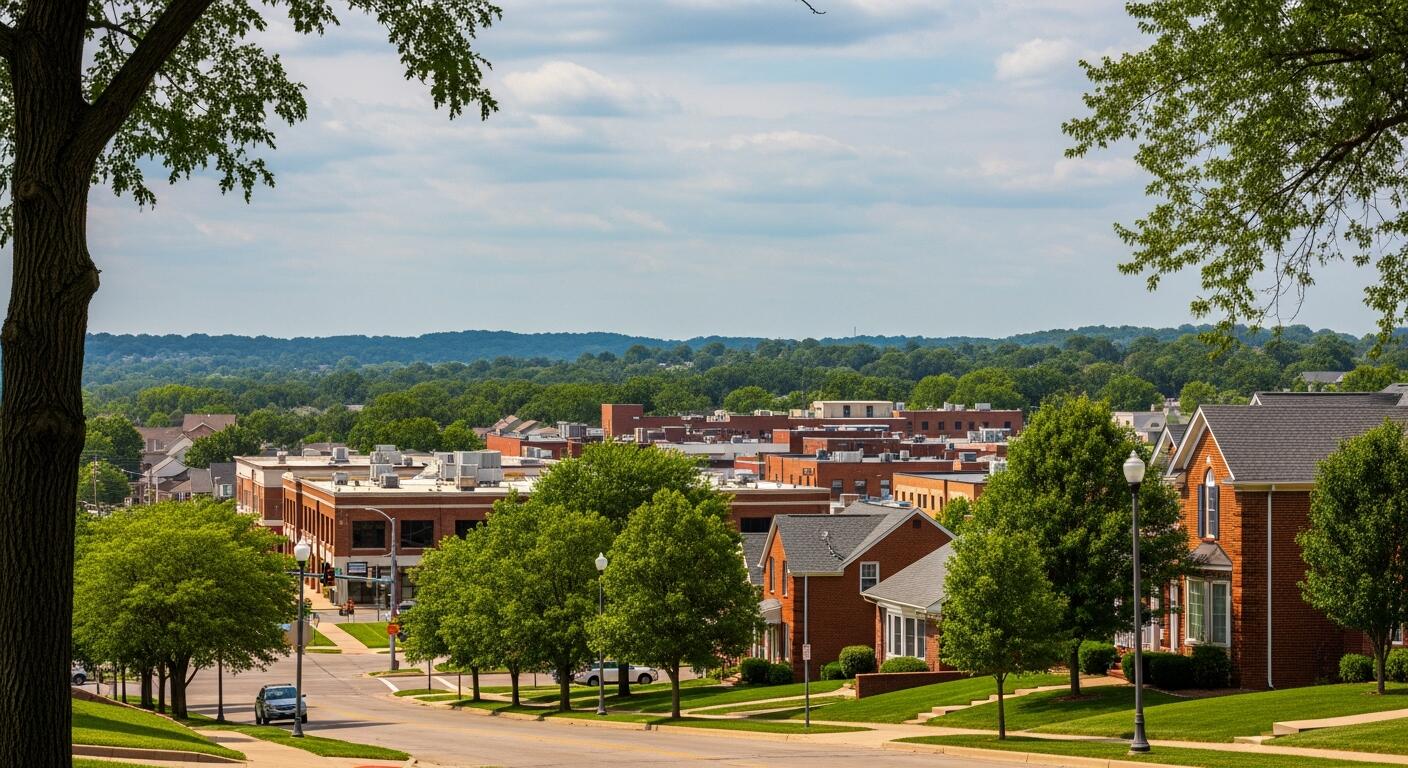
Prairie Village is one of the oldest planned suburbs in Johnson County, developed decades ago and essentially built out ever since, which means a 1031 buyer here is not looking for new construction so much as a narrow set of established neighborhood commercial buildings.
That maturity brings a level of tenant and neighborhood stability that newer growth suburbs cannot match, but it also means patience and a wider search radius are part of the plan from day one.
An investor drawn to Prairie Village for its household incomes and low vacancy should recognize that those same qualities are what keep landlords from selling in the first place, which is part of why so little inventory changes hands here in any given year.
A Built-Out, High-Land-Value Suburb
The Prairie Village Shops area near Mission Road and 71st Street is the commercial anchor, and land values in the surrounding residential neighborhoods have kept new commercial development to almost nothing for years. What exists tends to be small neighborhood retail and professional office, serving the surrounding households rather than drawing regional traffic.
Because so little land remains available for commercial use, redevelopment of an existing building is far more common here than ground-up construction, and that pattern is likely to continue for the foreseeable future.
Even a modest renovation to an existing neighborhood shopping center in Prairie Village can carry outsized returns, since the surrounding household density and land scarcity support rents that a comparable renovation elsewhere in the county might not.
A Narrow but Stable Property Mix
- neighborhood shopping center retail
- small professional and medical office suites
- service retail such as salons, dry cleaners, and cafes
- limited restaurant and food-service space
- a small amount of low-rise multifamily
Older Buildings, Stable Tenancy
Many Prairie Village commercial buildings date back several decades, and while the tenant base tends to be stable, roof and mechanical systems on these older structures should still be checked rather than assumed current. A well-maintained roof and updated HVAC can support lower utility cost and stronger net operating income even on an older building, but that has to be confirmed property by property rather than assumed from the neighborhood's reputation.
Long tenant tenure can also mask deferred maintenance, since a landlord with a stable, long-term tenant sometimes has less incentive to update mechanical systems than one facing frequent turnover.
A pre-purchase roof and mechanical inspection is worth the cost here even when the seller reports no recent issues, since a stable tenant relationship is not the same thing as a documented maintenance history, and the inspection cost is small relative to the price of an undiscovered roof replacement after closing.
Scarcity Shapes the 45-Day Search
Because so little commercial space changes hands in Prairie Village, an investor set on this specific city should expect a very short identification list and should plan, from day one of the 45-day window, to also review comparable neighborhood retail in nearby Fairway, Mission, and Leawood.
A buyer who waits to see what becomes available in Prairie Village alone risks reaching the identification deadline with no viable in-city candidate at all.
A broker who tracks quiet, off-market interest among Prairie Village landlords can sometimes surface a candidate before it is formally listed, which matters a great deal in a submarket where turnover is rare enough that public listings alone are not a reliable pipeline for meeting the 45-day deadline.
Documenting a Small, Careful File
Given the scarcity of inventory, the file prepared for the qualified intermediary and CPA should lean on thorough tenant history and building condition documentation, since there may be only one or two realistic candidates rather than a broad set to compare.
That file should also note tenant tenure length, since a long-standing tenant relationship can be a strength for income stability but a signal to check maintenance records more carefully.
Where the shortlist includes a backup candidate outside Prairie Village, the file should explain clearly why that alternate qualifies, so the qualified intermediary is not left to interpret the reasoning after the fact once the deadline has already passed.
Common 1031 Exchange Questions
Is there much commercial land left to develop in Prairie Village?
Almost none. Prairie Village has been essentially built out for years, so 1031 buyers are working with existing neighborhood commercial buildings rather than new construction, and redevelopment of an existing site is more common than ground-up building.
What kind of retail dominates Prairie Village?
Small neighborhood shopping center space near Mission Road and 71st Street, along with service retail and professional office serving the surrounding residential area rather than regional shoppers.
Should older Prairie Village buildings be assumed to have stable operating costs?
No. Roof and HVAC condition should be confirmed on a property-by-property basis rather than assumed from the neighborhood's overall stability, since long tenant tenure can sometimes mask deferred maintenance.
Do Prairie Village 1031 buyers usually need a backup city?
Most do, given how little inventory turns over here. Fairway, Mission, and Leawood are the closest comparable submarkets to widen the search once the identification window is underway.
What should the file for a Prairie Village property emphasize?
Detailed tenant history and building condition documentation, since the identification list may only include one or two realistic in-city candidates rather than a broad set to compare.