Lee's Summit has grown steadily along the US-50 and I-470 corridors in eastern Jackson County, pairing a historic downtown square with newer retail and office development that has followed the city's rooftop growth. Exchange candidates here range from century-old downtown buildings to recently built retail and flex product, so the identification strategy has to account for that age spread rather than treat the city as a single uniform market.
Downtown Square Versus the Growth Corridor
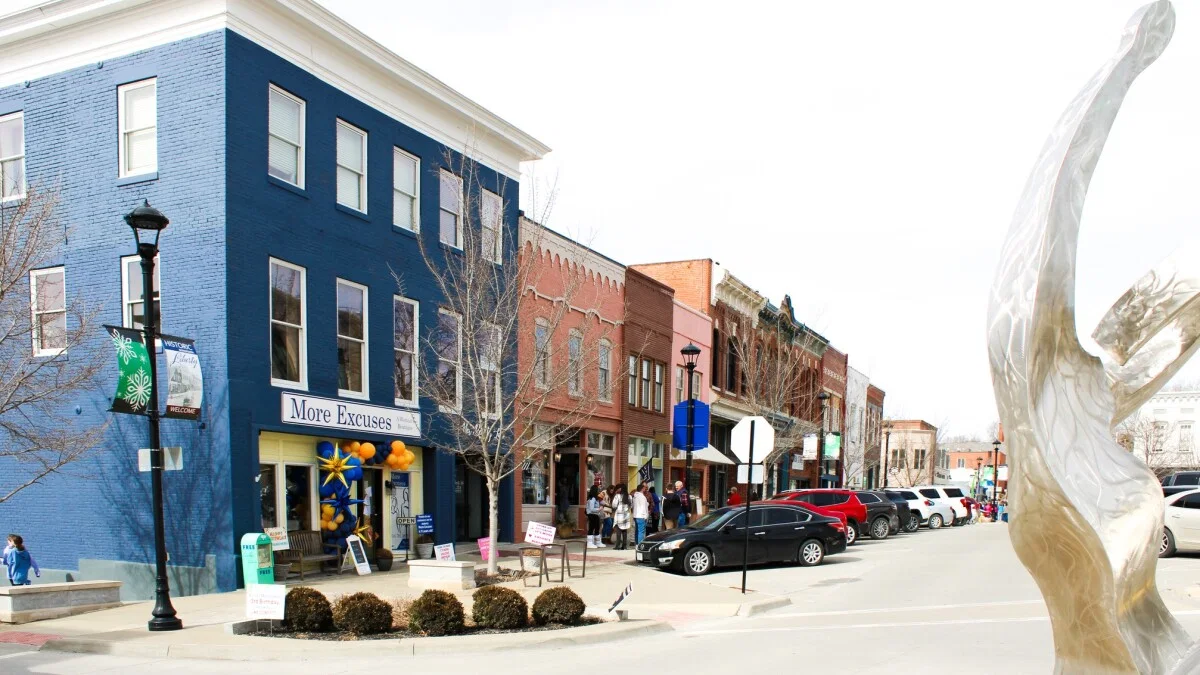
The historic downtown square carries smaller mixed-use buildings with retail, office, and some residential upper floors, while Summit Woods and the broader US-50 corridor hold newer junior-anchored retail and single-tenant pads. Office and flex development has grown near I-470, supported by the city's expanding population, and multifamily has followed along Chipman Road and the surrounding growth areas in garden-style and newer wrap-style product. Lee's Summit has continued adding rooftops on its eastern and southern edges for years, and commercial development has kept pace closely enough that vacancy in well-located retail has generally stayed tight.
Property Types Across Lee's Summit
- historic downtown mixed-use buildings
- US-50 corridor retail centers and pads
- I-470 corridor office and flex
- garden-style and wrap-style multifamily
- senior living and medical office near care campuses
Envelope Review Across an Age-Diverse Market
Downtown Lee's Summit buildings, some more than a century old, require a different diligence approach than the newer I-470 corridor product: structural condition, historic-building code compliance, and utility service upgraded for modern tenant use all need direct verification rather than assumption. Newer retail and flex buildings along US-50 are less likely to carry deferred envelope work, but utility capacity should still be checked against the specific tenant mix, particularly for any medical or specialty use near the city's senior living and healthcare campuses, where equipment loads can exceed a standard office circuit.
Identification Timing in a Growing Suburb
Lee's Summit's continued rooftop growth keeps demand for well-located retail and flex space strong, so properties along US-50 and near I-470 can attract multiple offers once priced correctly. Having lender preflight done and the qualified intermediary's exchange agreement signed before the 45-day window opens keeps a fast-moving Lee's Summit candidate from slipping away during paperwork delays.
Backup Logic Across Downtown and the Corridor
Pairing a downtown mixed-use candidate with a backup along the US-50 or I-470 corridor spreads risk across genuinely different building types and tenant demand drivers, rather than depending on two similar properties in the same segment. Coordinating that backup plan with the CPA and lender early keeps the 180-day exchange period on track if the primary candidate needs more diligence time than expected, and it gives the investor a genuine second option rather than a nominal one if title or financing issues surface late in the process.
Lee's Summit Deadline Control Plan
Lee's Summit should be reviewed with the sale closing date, the 45 day identification deadline, the 180 day acquisition deadline, debt replacement needs, and advisor questions visible in the same working file. For this replacement market, the active facts include historic downtown mixed-use buildings, US-50 corridor retail centers and pads, I-470 corridor office and flex, garden-style and wrap-style multifamily. Those details affect whether a candidate belongs on the written identification list, whether it should remain a backup, or whether it needs to be removed before the investor relies on it.
The Kansas City exchange plan should also document why Lee's Summit is being considered instead of a broader market label. The file should separate property fit, seller cooperation, lender timing, title review, inspection access, and closing certainty so the qualified intermediary, CPA, attorney, broker, and lender are not working from different assumptions after identification.
Common 1031 Exchange Questions
How different is downtown Lee's Summit from the US-50 growth corridor?
Significantly. The historic square holds smaller, older mixed-use buildings with structural and code considerations tied to their age, while the US-50 and I-470 corridors carry newer retail, office, and flex product built to serve the city's continued rooftop growth.
What should I check on a historic downtown Lee's Summit building?
Verify structural condition, any historic-building code requirements, and whether utility service has been upgraded for modern tenant use, since older downtown buildings often carry different compliance and capital considerations than newer suburban product.
Why is Lee's Summit retail sometimes competitive to acquire?
The city's continued population growth keeps demand strong for well-located retail and flex space along US-50 and I-470, so having financing and the qualified intermediary's paperwork ready before the 45-day window opens matters more here than in slower-growth suburbs.
Should my identification list mix downtown and corridor properties?
Yes, when possible. Pairing a downtown mixed-use candidate with a US-50 or I-470 corridor backup spreads exposure across different building types and tenant demand rather than relying on two similar properties in the same segment.
What happens if my Lee's Summit closing needs more time than the 180-day period allows?
The 180-day exchange period is a fixed federal deadline that generally cannot be extended, so any diligence issue that threatens the closing date should be flagged to the qualified intermediary and lender as early as possible rather than assumed to be flexible.
Is senior living near John Knox Village a viable replacement category?
It can be for investors comfortable with the operating and licensing considerations specific to senior care real estate, which differ meaningfully from standard multifamily underwriting and should be reviewed with an operator experienced in that asset class.
How should I weigh I-470 corridor office and flex space against US-50 retail?
Office and flex tenants near I-470 tend to sign longer leases with steadier renewal patterns, while US-50 retail can offer higher turnover but stronger daily traffic-driven demand, so the choice depends on whether the investor prioritizes lease stability or retail foot traffic.
Should I expect more competition for Lee's Summit product than in a smaller Jackson County suburb?
Generally yes, given the city's sustained population growth and broader recognition among regional buyers, so being ready to move quickly with financing and the qualified intermediary's paperwork in hand matters more here than in a slower-moving submarket.
Does the historic downtown square carry any special zoning considerations for exchange buyers?
Some downtown Lee's Summit buildings sit within a historic overlay that can affect exterior renovation and signage, so confirming the specific zoning and any design-review requirements before identification avoids a mismatch between the intended use and what's actually allowed.