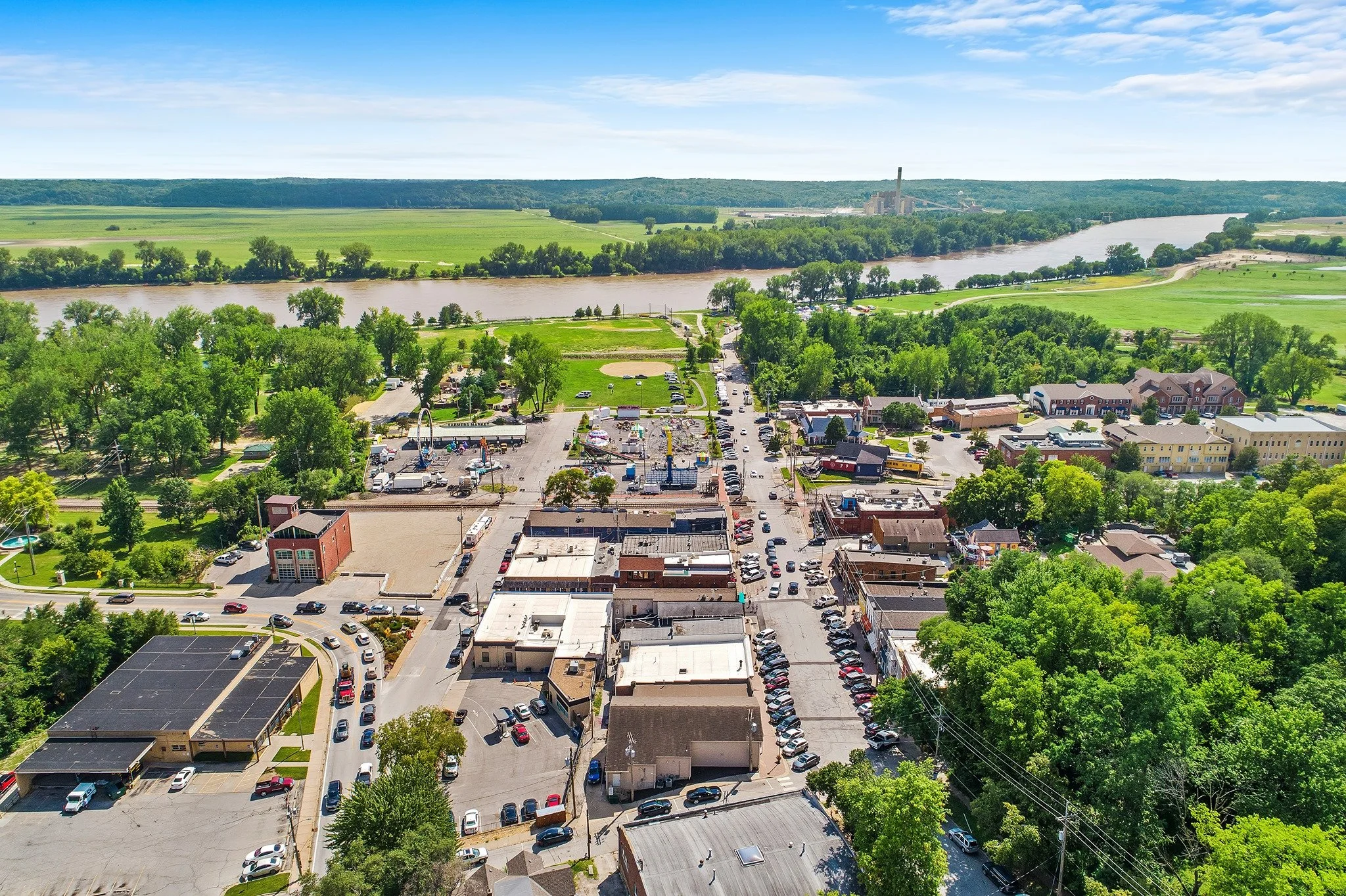
North Kansas City is its own incorporated city surrounded by Kansas City, Missouri, and it carries a working industrial identity that goes back to the rail yards and warehouse rows along the Missouri River bottoms. A 1031 buyer coming here is usually underwriting function first and finish second.
That distinction matters because a building here can look plain from the street and still command strong rent if the loading, clear height, and rail access line up with what today's users need, which is a different evaluation than a retail or office buyer would run elsewhere in the metro.
Investors who default to a generic office or retail underwriting checklist tend to miss the items that actually drive value in this submarket, which is why a function-first review pays off before an offer is written rather than after.
A River and Rail Industrial Base
The BNSF rail corridor and the river frontage still shape what gets built and re-leased in North Kansas City. Older brick and tilt-up warehouse buildings sit close to newer distribution space, and clear height, dock door count, and rail-served siding access matter more to leasing velocity here than curb appeal.
Armour Road anchors a smaller retail and service commercial strip that supports the surrounding employment base rather than functioning as a regional draw on its own, and that strip has stayed relatively stable even as larger retail categories have shifted elsewhere in the metro.
Corporate campuses tied to the healthcare sector, along with a handful of larger office users, have also added a layer of steadier office demand that sits alongside the industrial core rather than replacing it.
The Hospital District's Pull on Office and Medical Space
- rail-served industrial and warehouse buildings
- Armour Road retail and service storefronts
- medical office near the hospital campus
- flex and light manufacturing space
- older riverfront office conversions
Roof and Envelope Age on Older Industrial Stock
A meaningful share of North Kansas City's industrial inventory predates modern insulation and roofing standards, so utility cost and roof condition need to be priced into any offer on an older building rather than assumed away. Skylights, aging built-up roofing, and dated lighting all show up in the operating statement, and a lender underwriting the replacement loan will want that captured before closing rather than discovered after.
Newer distribution buildings closer to the interstate interchange trade at a premium partly because their utility and maintenance profile is easier to model, and that premium is often justified once an investor accounts for the deferred capital spending an older building will eventually require.
Timing a File Around a Working Industrial Market
Rail-served and dock-high buildings that fit an investor's size and use requirement do not sit long once priced correctly, so a North Kansas City identification list benefits from moving quickly on the first well-documented candidate rather than holding out for a second look, particularly inside the 45-day window.
Investors who wait for a marginally better option in this submarket often find that the tenant demand for well-located industrial space has already absorbed it, which argues for treating a solid candidate as the anchor of the three-property list rather than a placeholder.
Coordinating the Closing Record
Because so much of the value in a North Kansas City industrial building sits in mechanical and structural condition rather than finish, the file handed to the qualified intermediary and the investor's CPA should include roof and dock inspection notes alongside the standard rent roll and title work.
Where rail access is part of the value proposition, documentation of the existing rail agreement or easement should also be part of that file, since financing and future leasing both depend on that access remaining intact.
A survey confirming the exact boundary of any rail easement is worth the extra step, since a dispute over that boundary after closing can affect both the tenant's operations and the property's resale value.
Common 1031 Exchange Questions
Why does rail access matter for a North Kansas City replacement property?
Many tenants in this submarket depend on rail-served siding or proximity to it, so a building's rail access can affect lease renewal odds and, in turn, the income an investor is underwriting, along with the property's resale appeal down the road.
What operating cost issues are common on older North Kansas City warehouses?
Aging built-up roofing, limited insulation, and dated lighting are frequent findings, all of which raise utility cost and belong in the capital reserve conversation before closing rather than being treated as a surprise afterward.
Is North Kansas City mostly industrial for 1031 buyers?
Industrial and flex space make up the core of the inventory, with a smaller pocket of medical office tied to the hospital campus and a service retail strip along Armour Road rounding out the property mix.
How fast does dock-high industrial space move here?
Well-priced rail-served or dock-high buildings tend to move quickly, so an investor should be ready to act on a documented candidate early in the 45-day identification window rather than waiting for a better option to appear.
What should the intermediary file include for a North Kansas City building?
Roof and dock condition notes alongside the usual rent roll and title documentation, since mechanical and structural condition carry more of the value here than finish does, and rail agreements should be documented when access is part of the deal.