Liberty pairs a well-preserved historic downtown square, home to William Jewell College, with newer commercial growth along the Liberty Triangle and the US-152/I-35 corridor in Clay County. Exchange candidates here range from small century-old storefronts around the square to newer retail and medical office product tied to the city's continued residential growth north of Kansas City.
The Square Versus the Triangle
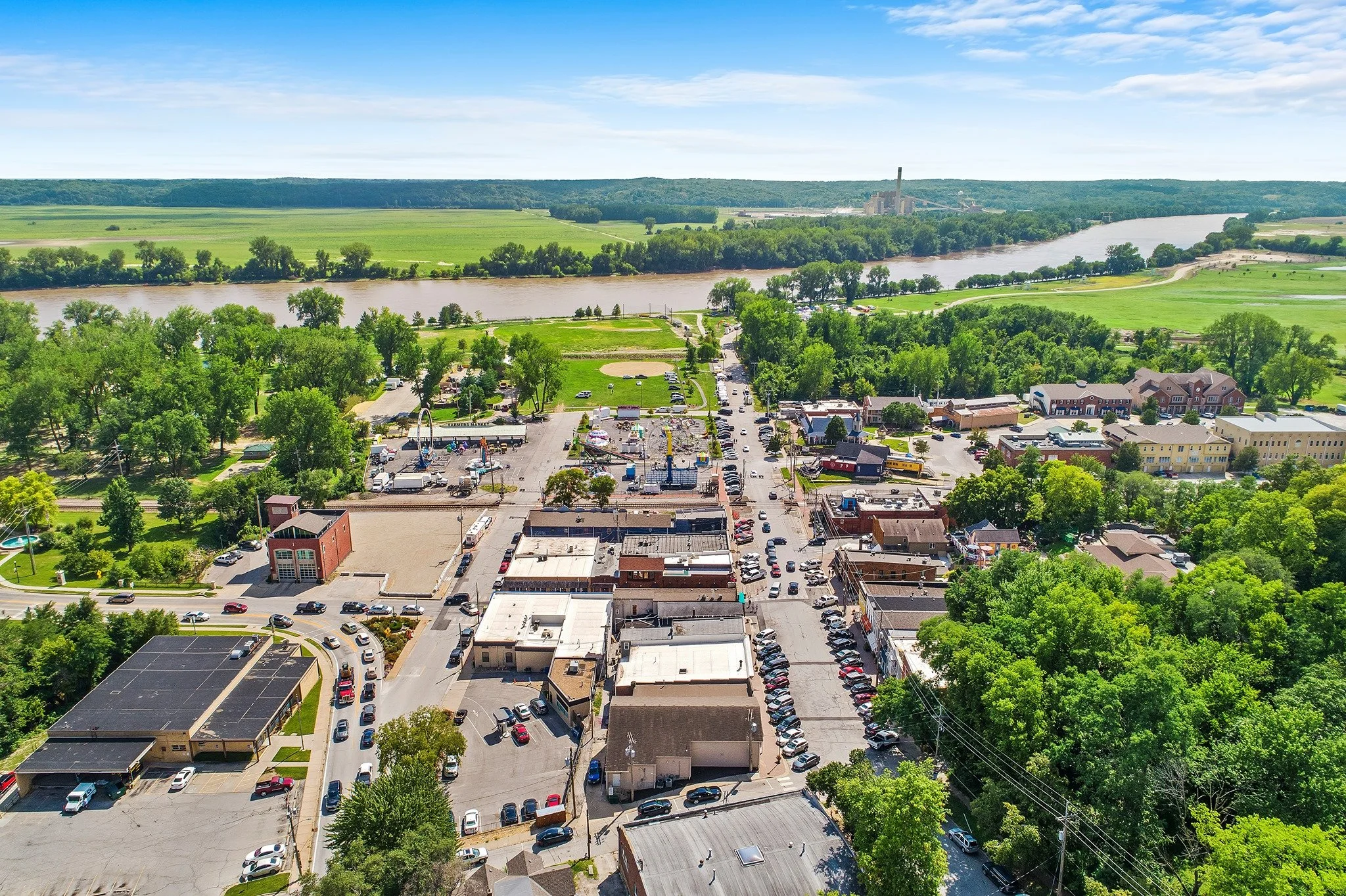
Liberty's historic downtown square carries small-format retail and office space in older buildings, several with upper-floor residential or office use above ground-floor retail, while the Liberty Triangle area along US-152 has developed as the city's newer retail and service corridor. Medical and dental office space has grown near the Liberty Hospital campus, supported by the surrounding residential base, and light industrial remains limited and concentrated along the rail corridor at the city's edges. New rooftops on the city's north and east sides have kept pulling retail and service demand toward the Triangle even as the square has held its own as a smaller-format destination.
Property Types Common to Liberty
- historic downtown square retail and office
- Liberty Triangle retail centers and pads
- medical and dental office near the hospital campus
- garden-style multifamily serving the growing residential base
- limited rail-adjacent light industrial
Envelope Diligence From the Square to the Triangle
Downtown Liberty's older buildings need direct verification of structural condition, roof age, and whether utility service has been updated to support current retail or office tenant use, since several of these buildings have carried the same infrastructure for decades under different ownership. Triangle-area retail, being newer, carries less deferred envelope risk but should still be checked for utility capacity matched to the tenant mix, particularly medical office suites near the hospital campus that may require specialty electrical or plumbing beyond a standard office build-out.
Working the 45-Day Window Across Two Distinct Corridors
Because Liberty's downtown square and Triangle corridor serve different tenant types and attract different buyers, an identification list built entirely within one corridor may miss the fuller set of comparable options available in the other. Coordinating with a local broker familiar with both the square and the Triangle, rather than treating Liberty as one uniform submarket, gives a more accurate read on pricing before the identification period closes.
Backup Planning in a Growing Clay County Suburb
A documented backup candidate in the other Liberty corridor, or in a neighboring Clay County suburb such as Kearney or Gladstone, protects the identification list if the primary candidate's financing or title work takes longer than expected. Coordinating that backup with the CPA, qualified intermediary, and lender early keeps the 180-day exchange period from depending on a single Liberty property.
Liberty Deadline Control Plan
Liberty should be reviewed with the sale closing date, the 45 day identification deadline, the 180 day acquisition deadline, debt replacement needs, and advisor questions visible in the same working file. For this replacement market, the active facts include historic downtown square retail and office, Liberty Triangle retail centers and pads, medical and dental office near the hospital campus, garden-style multifamily serving the growing residential base. Those details affect whether a candidate belongs on the written identification list, whether it should remain a backup, or whether it needs to be removed before the investor relies on it.
The Kansas City exchange plan should also document why Liberty is being considered instead of a broader market label. The file should separate property fit, seller cooperation, lender timing, title review, inspection access, and closing certainty so the qualified intermediary, CPA, attorney, broker, and lender are not working from different assumptions after identification.
Common 1031 Exchange Questions
How does downtown Liberty differ from the Liberty Triangle for exchange purposes?
The historic square holds smaller, older buildings with structural and utility-age considerations tied to decades of continuous use, while the Liberty Triangle along US-152 carries newer retail and service product built to serve the city's more recent residential growth.
What should I check on a Liberty medical office suite near the hospital campus?
Confirm the electrical and plumbing systems were built or upgraded for the specific medical use rather than a standard office build-out, since specialty equipment and code requirements can differ meaningfully from general professional office space.
Is Liberty's downtown square building stock a good fit for every investor?
It depends on risk tolerance. These buildings often need direct verification of structural condition and utility age given their decades of continuous use, which suits investors comfortable with older-building diligence more than those seeking turnkey newer product.
Should I look at neighboring Clay County suburbs as backup options?
Yes. Kearney and Gladstone both sit in the same county and offer different but comparable property types, so naming a backup in one of them can protect the identification list if the primary Liberty candidate's financing or title work runs long.
Who handles document assembly for a Liberty exchange closing?
The qualified intermediary typically coordinates the exchange agreement and settlement documents, while the title company handles the Clay County recording and title work; keeping both moving on the same schedule avoids a late gap before the 180-day exchange period closes.
Does Liberty's growth make the Triangle a more competitive submarket than the square?
Generally yes for well-located retail, since newer product along US-152 attracts both local and outside buyers, while downtown square buildings tend to draw a smaller, more specialized pool of investors comfortable with older-building diligence.
Should I get a separate opinion on a Liberty property's title history before identifying it?
It's a reasonable step for older downtown square buildings especially, since decades of ownership changes can complicate a title search; raising this with the title company early avoids a surprise that could delay the closing near the end of the 180-day exchange period.
How does William Jewell College's presence affect demand near downtown Liberty?
The college supports a base of steady foot traffic and rental demand for small retail and service tenants around the square, though it is a modest, localized driver rather than a factor that changes pricing across the broader Liberty commercial market.
Is a forward exchange the right structure for most Liberty transactions?
For most investors selling first and then identifying a Liberty replacement property, yes, a standard forward exchange is the simplest structure; reverse or improvement exchanges are worth discussing with the qualified intermediary only when the timing or condition of a specific property requires it.